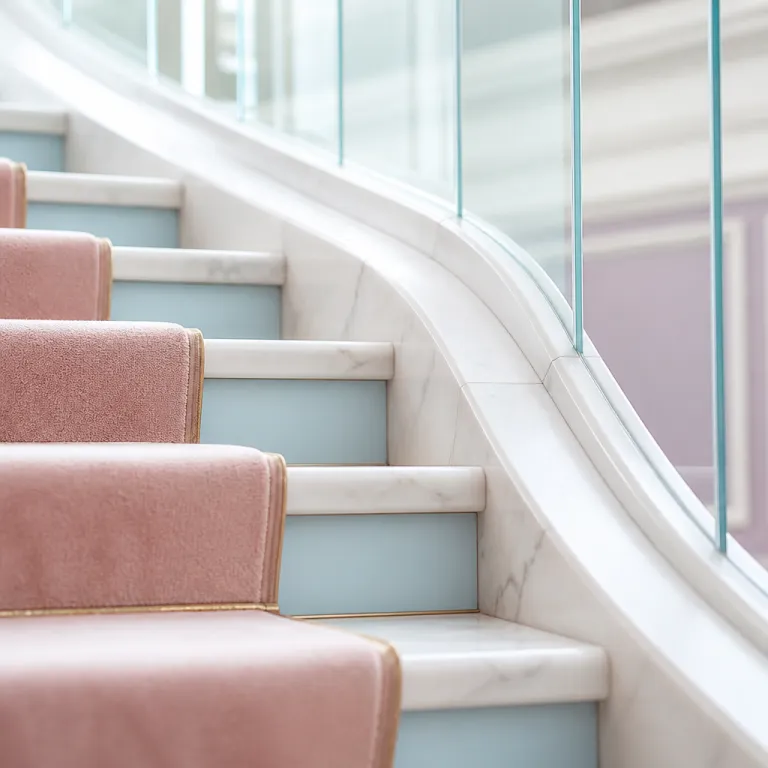
The palace hotel staircase as architecture’s boldest design statement
In a true palace hotel, the staircase is not mere circulation; it is ceremony and architectural storytelling. The most serious properties treat the central stair as the project’s spine, shaping how every room, corridor and salon relates to it. When you book a hotel in a historic city, the way you move between the ground floor and the roof often tells you more about its soul than the size of the rooms.
Architects and owners know this, which is why palace hotels invest heavily in grand staircases that function as both sculpture and social stage. As one luxury brand strategy memo from a European consultancy put it, “We build grand staircases to enhance aesthetics, create landmarks, and attract affluent guests.” That single line captures how a dramatic stair links architectural practice, brand positioning and guest emotion in one beautiful vertical gesture.
For travelers comparing hotels, this matters in very practical ways. A staircase that has been restored with timeless elegance usually signals that the original palace fabric has been respected from basement to rooftop pool, rather than carved into a generic building with anonymous floors. When you see stone treads worn by centuries of arrivals, or glass balustrades that frame a panoramic view of the city, you can expect the same care in your room, in the dining spaces and even in the quiet corners of the hotel’s public areas.
Photo idea and alt text: A wide shot of a palace hotel grand staircase taken from the main floor landing, showing stone steps, ornate balustrades and guests ascending. Suggested alt text: “Grand staircase in a historic palace hotel linking ground floor lobby to main floor salons.”
From private residence to palace hotel: how staircases carry history
Many of the world’s most atmospheric palace hotels began as a private residence, sometimes as a royal house and sometimes as an aristocratic townhouse in a dense business district. When these estates become a converted hotel, the grand staircase is usually the one element that survives almost untouched, anchoring the new rooms and public spaces around a central axis. For guests, walking those steps is the most direct way to feel the building’s age without reading a single plaque.
Consider the Dandolo staircase at the future Four Seasons Hotel Danieli in Venice, where the original palace fabric dates back to the 14th century and the stair’s carved stone and tracery still dominate the main floor. Four Seasons has confirmed that the property is undergoing a multi-year restoration, and the design language here remains unapologetically Gothic, with windows creating a play of lagoon light across the landings and a vertical route that feels closer to a chapel than to a modern hotel. When you book a room in such a palace, you are effectively booking a daily ritual of ascending and descending through history, not just a place to sleep near San Marco square.
Elsewhere, former city mansions have been reimagined so that the staircase links garden, ground floor salons and roof terraces in one continuous promenade. In the best examples, the main staircase lands gently beside a small internal garden or courtyard, before rising again toward a rooftop pool or swimming pool that overlooks the central skyline. If you care as much about landscape as interiors, look for properties where the stair frames greenery as carefully as it frames marble; our guide to palace hotels where the garden matters more than the lobby explains why this visual connection changes the entire stay.
Photo idea and alt text: Detail of the Dandolo staircase’s Gothic arches with soft daylight from the lagoon. Suggested alt text: “Historic Dandolo staircase in Venice with carved stone arches and lagoon light.”
Social theatre on the main floor: where arrivals are meant to be seen
Historically, the grand staircase was the social filter between the street and the salons, and the main floor landing was where arrivals were meant to be seen. In a serious palace hotel, you still feel that choreography as you step from the ground floor entrance, cross the central hall and begin to climb toward the piano nobile. The architectural statement here is about theatre and social ritual, not just structure, and you sense it in the way staff glance up to greet you as you rise.
Some properties have compromised this drama by routing guests through side lifts or anonymous corridors, but the most confident hotels keep the grand staircase as the default route to the main floor. They might tuck a discreet elevator into the structural core for accessibility, yet the visual focus remains on stone, metal and carpet flowing upward in one continuous sweep. If you are choosing between hotels in the same city, ask yourself which one lets you arrive like a character in a film and which one shuffles you from basement car park to room without a single memorable space.
Lighting is crucial to this social theatre, and the best architectural practice teams now treat staircases as three-dimensional canvases for light and shadow. Subtle LEDs under each floor nosing, art placed at eye level on the second floor landing and carefully angled fixtures that graze carved balustrades all encourage guests to walk rather than ride. For a deeper look at how corridors, staircases and long enfilades shape emotion, our feature on light, shadow and the long corridor shows how vertical and horizontal routes work together to tell a building’s story.
Photo idea and alt text: Evening view of a softly lit staircase with guests pausing on the main floor landing. Suggested alt text: “Palace hotel staircase with dramatic lighting creating social theatre on the main floor.”
Material language: stone, glass and the weight of timeless elegance
When palace hotels commission new staircases or restore old ones, material choice becomes a manifesto. Marble treads, bronze handrails, carved stone newels and glass balustrades are not just decorative; they are the physical vocabulary of a luxury stair that signals palace-level ambition. As a guest, you feel that language underfoot every time you move from your room to the dining room or from the spa to the rooftop pool.
Affine Design’s work at the Four Seasons Hotel George V in Paris is often cited as a benchmark, with the firm publicly credited for reimagining circulation and suites during a major renovation. The architectural team treated the stair not as a circulation problem but as a sculptural object connecting the ground floor lobby, the main floor salons and the upper rooms. Their approach respected the original palace proportions while introducing contemporary detailing, so the staircase now reads as both historic and freshly cut. When you walk those steps after a late January check-in, the cool stone and precise metalwork tell you that no part of the building has been value engineered into blandness.
Newer properties such as The Fontenay in Hamburg take a different approach, using sweeping curves, pale stone and expanses of glass to create a lighter, more fluid ascent between floors. Here the staircase frames a panoramic view of the lake and city, turning each climb from the ground floor to the second floor into a slow reveal of water, trees and skyline. If you are drawn to material stories, you will find more on how marble, Murano glass and velvet define palace atmospheres in our deep dive into the material language of palace hotels, which shows how vertical elements like stairs anchor every other design decision.
Photo idea and alt text: Close-up of marble treads and bronze handrail catching natural light. Suggested alt text: “Detail of marble staircase and bronze balustrade in a luxury palace hotel.”
Innovation in vertical design: from double helix to Doubt Staircase
Not every palace hotel is content to polish an old balustrade; some use the staircase to push architectural innovation. The double helix at Château de Chambord, traditionally linked to Leonardo da Vinci’s circle, remains a pure example of a stair as privacy machine, where two intertwined flights allow people to ascend and descend without ever meeting. That idea now influences contemporary vertical design in high-end hotels, especially in converted schemes that want to separate public circulation from private residence style suites.
In Venice, artist Carsten Höller’s Doubt Staircase at Palazzo Diedo shows how art and architecture can merge into a single vertical installation. Höller’s project, documented in exhibition materials and press coverage, uses spiraling metal forms and mirrored surfaces that feel like a manifesto for future palace properties that want to treat the grand staircase as a gallery rather than a corridor. The methods used here — advanced construction techniques, 3D modeling and close collaboration between design firms and artistic collaborators — echo the tools now shaping new staircases in palace hotels from Europe to Asia.
Design firms such as HOK, which reimagined the Lotte New York Palace Hotel’s suites and lounges according to the firm’s published project notes, understand that guests will judge the entire building by the quality of the climb between the main floor and the upper rooms. A staircase that feels like an afterthought suggests a hotel that has focused on the rooftop pool and swimming pool while neglecting the daily routes guests actually use. When you evaluate a palace in a dense business district or on a historic square, pay attention to whether the stairs feel like a coherent architectural idea or a leftover void squeezed between service shafts.
Photo idea and alt text: Abstract view of a contemporary spiral stair with reflective metal surfaces. Suggested alt text: “Contemporary art-inspired staircase with spiraling metal structure in a historic palazzo.”
How to read a staircase when choosing your next palace stay
For travelers using a luxury booking website, photographs of the staircase are often more revealing than wide shots of the lobby. Start by looking at how the stair connects the ground floor entrance to the main floor and then to the second floor, noting whether each landing opens onto meaningful spaces such as a library, a small garden terrace or a quiet seating area. If every landing simply dumps you into anonymous corridors of rooms, the vertical design intent is probably weak.
Next, study the relationship between the staircase and the rest of the building, especially in properties that began as an original palace or grand city house. Does the stair align with major window elements, framing a panoramic view of the skyline, river or internal courtyard, or is it buried in the basement with no natural light? Hotels that treat the stair as a vertical viewing platform usually care more about timeless elegance than about squeezing in one extra room per floor.
Finally, consider how the staircase coexists with lifts, pools and rooftop amenities in both singular and plural forms. The best hotels make the stair so compelling that you choose it over the elevator when heading to the rooftop pool, the swimming pool or the dining room, turning every movement into part of the experience. When you find a palace where the grand staircase, the garden, the roof terraces and the rooms all feel like chapters of one story, you have found a building that understands vertical architecture as the ultimate statement of intent.
Photo idea and alt text: Guest walking up a staircase toward a sunlit roof terrace with plants. Suggested alt text: “Guest using a palace hotel staircase that connects lobby, garden and rooftop terrace.”
Key figures on palace hotel staircase investments
- Many leading palace hotels now reserve substantial portions of renovation budgets for staircase restoration and redesign, with consultants estimating that circulation upgrades can account for 10–20% of major capex projects in heritage properties.
- At the Four Seasons Hotel George V in Paris, Affine Design’s reworking of circulation for 244 rooms and suites illustrates how a single staircase strategy can influence the entire room inventory of a flagship property.
- Industry consultants note that properties which highlight staircases in marketing imagery often see noticeable increases in social media engagement, as guests share photographs of vertical spaces more frequently than of standard rooms.
- The Fontenay in Hamburg opened with a fully contemporary staircase concept, illustrating how new-build luxury hotels now treat vertical routes as brand-defining elements rather than technical necessities.
- Art-integrated staircases such as Carsten Höller’s Doubt Staircase at Palazzo Diedo demonstrate how collaborations between architects and artists can generate global press coverage, effectively turning a circulation element into a standalone cultural attraction.
Photo idea and alt text: Collage of three different palace staircases showing historic, contemporary and art-led designs. Suggested alt text: “Comparison of historic, modern and art-focused palace hotel staircases.”
FAQ about palace hotel staircases and vertical architecture
Why do palace hotels invest so heavily in staircases instead of only in rooms?
Staircases shape every guest journey, linking the ground floor, main floor and upper rooms in a way that no single room can. A strong vertical design statement signals that the property values narrative and heritage, not just square metres and amenities. This investment often improves both guest satisfaction and the hotel’s visual identity, which in turn supports higher average daily rates according to luxury hospitality analysts.
Which palace hotels are known for iconic staircases?
Several properties are frequently cited for their staircases, including the Four Seasons Hotel George V in Paris, the future Four Seasons Hotel Danieli in Venice and contemporary landmarks such as The Fontenay in Hamburg. Outside pure hospitality, the double helix at Château de Chambord and Carsten Höller’s Doubt Staircase at Palazzo Diedo influence how designers think about vertical movement. When browsing hotels, look for images and floor plans that highlight these kinds of grand staircases.
How can I evaluate a staircase from photos on a booking website?
Focus on how the stair connects key spaces such as the lobby, dining rooms, garden terraces and rooftop pool areas, rather than on decorative details alone. Check whether natural light from large windows or a panoramic view is part of the composition, which usually indicates thoughtful architectural practice. Also note whether the stair appears central and celebrated or hidden beside service doors.
Are modern lifts making palace hotel staircases obsolete?
Lifts are essential for accessibility and convenience, but they have not replaced the experiential role of the staircase in a palace hotel. The best properties integrate elevators discreetly while keeping the grand staircase as the emotional and visual focus of the building. Guests often choose to walk because the stair offers beauty, social theatre and a stronger sense of place.
What should solo travelers look for in staircase design when choosing a palace stay?
Solo travelers should look for staircases that feel safe, well lit and actively used by other guests, rather than isolated or purely ceremonial. A staircase that connects to lively public areas, small seating niches and perhaps a garden or roof terrace can make moving around the building more sociable and less anonymous. When the vertical routes feel welcoming, the entire palace becomes easier to inhabit alone.
Photo idea and alt text: Solo traveler on a well-lit stair with staff visible on the main floor. Suggested alt text: “Solo guest using a bright, welcoming staircase in a luxury palace hotel.”