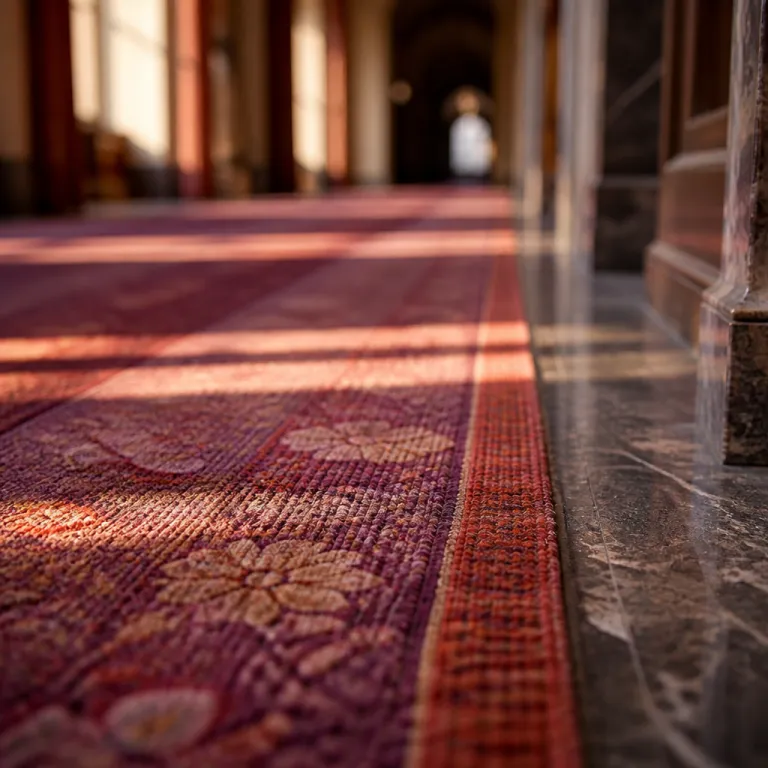
The enfilade effect and why palace corridors matter more than guestrooms
In a true palace hotel, the story starts long before the guestrooms. The most memorable properties treat every corridor, gallery, and enfilade as a carefully orchestrated sequence where palace hotel architecture, interior space planning, and lighting design shape your first impression. One aligned run of doors can feel more powerful than a chandeliered ballroom.
Architects working on a historic palace building know that the enfilade is their narrative spine. They align openings so that a guest standing at one threshold reads a deep axis of rooms, each framed by a different balance of light and shadow that reveals the architectural character of the hotel. Long perspectives pull you forward, while subtle changes in colour temperature and ceiling height slow you down at key moments.
Lighting designers then translate this spatial script into a layered illumination strategy that respects heritage. They use concealed light sources to graze stucco, highlight cornices, and keep the front building facade legible from within, so the guest always understands their place in the palace. This is where palace hotel lighting and spatial design become less about raw brightness and more about psychological control of pace and mood.
In the best palace hotel projects, the corridor is never a neutral tube. It is a calibrated architectural lighting instrument that shifts from warm, intimate pools of quality light near guest rooms to cooler, more ceremonial tones near staircases and galleries. That contrast makes even compact suites feel like private retreats off a grand route, rather than anonymous rooms off a service hallway.
For travelers choosing a palace hotel, this is a crucial filter. When you walk a corridor and feel nothing, the architecture and interiors are probably working like a standard hotel project rather than a palace narrative. When every turn of the enfilade feels intentional, you are in a building where light, space, and story are being handled by serious architects and interior designers.
Natural light as the quietest form of luxury in palace hotels
Daylight is the one luxury that cannot be faked with technology. Palace hotel architecture and lighting reach another level when the building uses natural light as its primary material, and artificial illumination only refines what the sun already does. You feel this immediately in properties with atriums, courtyards, and stairwells that breathe.
Think of the Palace Hotel in San Francisco, where a soaring glass canopy floods the central court with soft light. Here, architectural lighting is deliberately restrained during the day, allowing the changing colour temperature of the sky to animate the interior spaces while guests move between rooms and public salons. At Aman Venice, opened in 2013 within the 16th-century Palazzo Papadopoli, filtered daylight from the Grand Canal slips through high windows, turning frescoed corridors into living paintings that shift from silver morning tones to amber dusk.
Historical palaces in Athens, Greece, show another approach, where thick walls and deep reveals modulate light sources with almost cinematic precision. In some restored properties in Athens, architects and lighting designers collaborate so that daylight washes the front building facade and then bounces into galleries, while discreet lighting control systems take over only after sunset. This is palace hotel lighting design as a twenty-four-hour choreography, not a static scheme.
Adaptive reuse projects push this thinking further. At Hoshinoya Nara in Japan, a former institutional site has been transformed into a refined retreat, and its circulation spaces demonstrate how a hotel project can turn once harsh corridors into contemplative routes using carefully edited light and shadow; this kind of bold conversion shows how palace-level ambiance can emerge from unlikely origins. For travelers, these examples prove that the most luxurious suites are often those where you can switch off every fixture and still read the room by moonlight.
When you evaluate a palace hotel online, look closely at photographs of staircases, galleries, and atriums. If you see heavy reliance on downlights at all hours, the lighting design is probably compensating for weak architectural planning. If the images show nuanced daylight, soft reflections, and a clear relationship between windows, corridors, and views, you are likely looking at a building where natural light has been treated as the first and finest amenity.
How palace hotels hide modern systems without breaking the story
Historic palaces were never designed for fire codes, emergency signage, or digital lighting control. Yet palace hotel architecture and lighting today must reconcile these systems with centuries-old stone, plaster, and timber without turning the corridor into an airport. The best properties manage this tension so elegantly that most guests never notice the engineering.
In many leading palace hotel projects, architects and interior designers start by mapping every required door, sprinkler, and exit sign along the main enfilades. They then use wall panelling, mirrored pilasters, and deep architraves to absorb these elements, allowing the architectural rhythm of the corridor to remain intact while the building meets safety regulations. Fire doors are often concealed within full-height panels that read as part of the interiors rather than abrupt interruptions.
Lighting designers play a crucial role here, using architectural lighting to guide the eye away from technical clutter. They place quality light on artworks, cornices, and floor inlays, while keeping necessary signage legible but visually quiet through careful control of brightness and colour temperature. In some palace hotel corridors, linear light sources are integrated into handrails or skirting, creating a continuous glow that satisfies emergency requirements without a forest of visible fixtures.
Smart lighting control systems add another layer of subtlety. In guest rooms and suites, scenes shift automatically from arrival to turndown, while public corridors gently dim as the night deepens, preserving the palace mood and saving energy. This integration of lighting control with climate control and access systems turns the entire hotel project into a responsive organism rather than a static building.
For travelers, one practical test is to walk a corridor and look up. If you see a chaotic ceiling of downlights, sensors, and speakers, the project team has probably prioritised equipment over experience. If the ceiling is calm, with light sources carefully concealed and the architectural story uninterrupted, you are in a palace hotel where technology serves the narrative rather than stealing the scene.
From echoing halls to intimate galleries: sound, texture, and light
Grandeur without comfort quickly feels institutional, especially in long stone corridors. Palace hotel architecture and lighting only reach their full potential when they work with acoustics and materials to soften echo and create intimacy. The most successful properties understand that a whispering gallery is romantic, while a shouting lobby is not.
High ceilings, marble floors, and plaster walls are hallmarks of many palace hotel buildings from Paris to Athens. Left untreated, these surfaces bounce both light and sound, turning corridors into bright, noisy tunnels that undermine the calm expected in luxury rooms. To counter this, interior designers introduce thick rugs, upholstered wall panels, and heavy draperies that absorb noise while also catching light in rich, textured ways.
Lighting designers then tune their schemes to these softer surfaces. Grazing light along fabric or carved timber creates depth without glare, while carefully chosen colour temperature keeps stone from looking cold and institutional. As lighting designer Roger Narboni has noted in interviews about heritage projects, the aim is to “reveal architecture at night without overwhelming it.”
In some palace hotel projects, especially those with long galleries leading to suites, the corridor becomes a curated art route. Properties in cities like New York and Athens, Greece, rotate paintings, photography, and sculpture along these paths, using focused architectural lighting to create a sequence of intimate viewing moments. The Lanesborough in London and Hôtel de Crillon in Paris are often cited for this kind of gallery-like curation, where even returning guests find new visual narratives in familiar interior spaces.
For you as a solo explorer, this has a direct impact on how the hotel feels at midnight. A well-tuned corridor will hold a soft, warm glow, with footsteps muffled and artworks quietly lit, making the walk back to your room feel like a private promenade. A poorly considered one will be either harshly bright or oppressively dim, with sound ricocheting off hard surfaces and no sense of architectural story to guide you home.
Reading facades, outdoor lighting, and digital journeys before you book
The story of a palace hotel begins at the facade, long before you reach the lobby. Palace hotel architecture and exterior lighting extend to gardens and courtyards, where the front building and landscape are composed like a stage set that signals what awaits inside. A thoughtful outdoor scheme can tell you more about the hotel project than any marketing copy.
Look at how the building is lit from street level. In Athens, Greece, for example, several restored neoclassical palaces use restrained architectural lighting to wash columns and pediments with quality light, leaving upper floors in softer shadow so the massing remains legible. In New York, properties sometimes over-illuminate, but the most refined addresses balance light sources so that the urban palace-style grandeur feels sculpted rather than flooded.
Outdoor lighting also reveals how seriously a palace hotel takes its landscape and arrival sequence. Pathways, courtyards, and porte cochères should be lit with a hierarchy that guides you intuitively, using warm colour temperature near entrances and cooler tones in gardens to preserve night sky views. When lighting control systems are well programmed, the exterior shifts subtly through the evening, supporting events, private arrivals, and late returns without ever feeling theatrical for its own sake.
Your digital journey offers another lens. On booking platforms and palace-focused travel sites, skip content that only shows tight room shots and look for photography that reveals corridors, staircases, and the relationship between facade and interior spaces. Articles that analyse palace-style hospitality design for luxury travelers show how reading a building’s spatial story can change the way you choose where to stay, and the same mindset applies to every palace hotel search. A property confident in its architecture and interiors will always show you the long views, not just the bed.
Awards can be a useful filter, but read them carefully. Prizes for lighting design or architectural restoration—such as IALD Awards or Europa Nostra heritage citations—often signal that architects, interior designers, and the appointed lighting designer have worked as a coherent équipe on multiple projects, rather than treating lighting as an afterthought. When you see this level of collaboration, you can expect corridors, suites, and public rooms to feel like chapters of a single, well-told story rather than disconnected sets.
How to evaluate palace hotel architecture and lighting like an insider
Once you start reading palace hotel architecture and lighting, you will never look at a corridor the same way. The goal is not to become an architect, but to recognise when a building is working hard on your behalf. A few focused checks can separate stage-set grandeur from genuinely thoughtful design.
Begin with the basic relationship between corridors, guest rooms, and public rooms. Does the route from the entrance to your floor feel like a coherent enfilade, with views, pauses, and shifts in light that mark thresholds between public and private zones? Or does it feel like a maze of anonymous hallways, where lighting is either uniformly bright or uniformly dim, with no sense of progression?
Next, pay attention to the behaviour of light sources over time. In a well-run palace hotel, lighting control systems will adjust scenes through the day, with cooler colour temperature in breakfast rooms, warmer tones in evening corridors, and subtle night lighting that respects sleep. You should notice quality light on faces and architectural details, not on air conditioning grilles or service doors.
Sound and comfort matter just as much. Walk a long corridor and listen for echo, then look down to see how rugs, runners, and furniture break up the space. Properties that invest in this level of architectural and interior design detail usually also invest in better materials, better maintenance, and better service, which is why hospitality research often links strong architectural storytelling with measurable increases in guest satisfaction.
Finally, use your pre-stay research wisely. Explore the hotel’s design features online, attend guided tours if available once you arrive, and research the hotel’s history before visiting so you can appreciate how architects, interior designers, and lighting designers have adapted the original palace building. When you find a property where the long corridor, the staircase, and the gallery feel as considered as the suite, you have found a palace hotel that understands space as its most powerful form of luxury.
FAQ
How do palace hotels use light and shadow in design ?
They strategically place lighting to highlight architectural features and create ambiance. In practice, this means combining daylight, concealed artificial light sources, and reflective materials so that corridors, staircases, and galleries reveal carvings, cornices, and artworks without glare. The result is a sequence of spaces where light and shadow guide movement and emotion as effectively as signage.
Why are long corridors significant in palace hotels ?
They guide guests through the space, enhancing the storytelling experience. Long corridors and enfilades allow architects to frame views, mark thresholds, and build anticipation as you move from public salons to private suites. When supported by thoughtful architectural lighting and acoustics, these routes become memorable journeys rather than dead space.
What materials are commonly used to enhance light and shadow effects ?
Reflective surfaces like polished marble and gilded mirrors are often used. Palace hotels also rely on plaster mouldings, carved timber, silk wall coverings, and deep window reveals to catch grazing light and create depth. These materials work with both daylight and artificial lighting design to make even narrow corridors feel layered and atmospheric.
How can I tell if a palace hotel has good architectural lighting before I book ?
Study photos of facades, corridors, and staircases rather than only guest rooms. Look for balanced brightness, clear hierarchy of focal points, and a visible relationship between windows, interior spaces, and fixtures, which signals professional lighting control and planning. Awards for architecture or lighting design, and detailed descriptions of design teams, are further signs that the building has been treated with care.
Do smart lighting systems really improve the guest experience in palace hotels ?
Well-programmed systems can make transitions between day and night feel effortless. They adjust colour temperature and intensity across corridors, rooms, and public areas, supporting circadian comfort while preserving the historic mood of the palace. When integrated discreetly, these systems enhance both sustainability and ambiance without drawing attention to the technology itself.