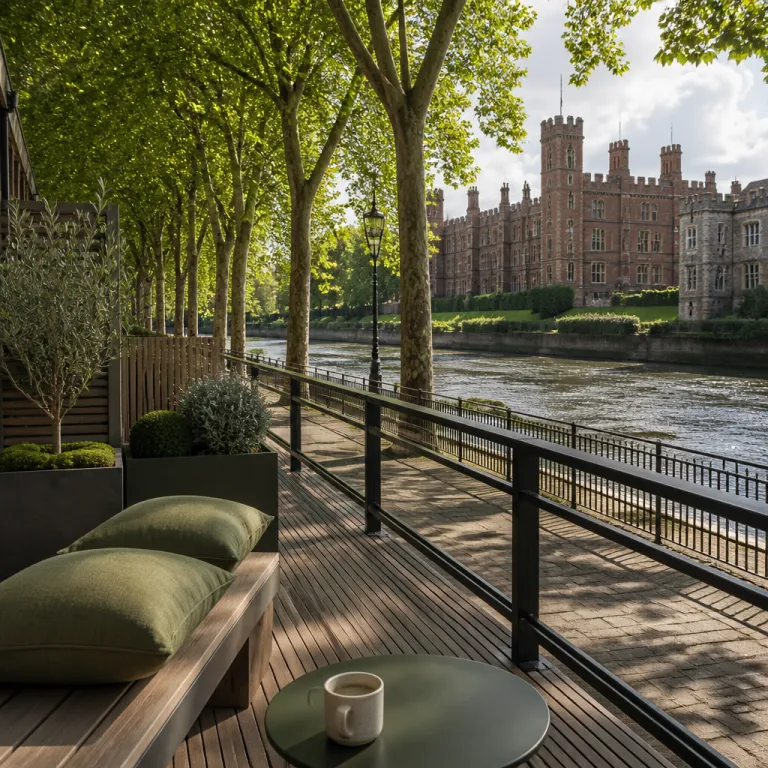
Section 1 – Why Lambeth Palace matters for luxury travellers in London
Lambeth Palace stands on the south bank of the River Thames, facing the Palace of Westminster across the water. This fortified complex is the official London residence of the Archbishop of Canterbury and has shaped the religious and political life of England for centuries. For luxury travellers choosing an upscale stay nearby, understanding this living institution transforms a simple hotel booking into a culturally rich decision.
The palace complex, with its brick gatehouse known as Morton’s Tower and its great hall rebuilt after the English Civil War, forms one of the most important historic ensembles in the capital. It has served almost continuously as the residence of the Archbishop of Canterbury since the thirteenth century, giving the site a continuity that few other buildings in London can match. When you select a premium hotel close to Lambeth Palace Road, you are effectively placing yourself beside more than eight centuries of English ecclesiastical history and influence.
Today the Lambeth Palace estate balances privacy for the Archbishop’s household with carefully managed public access. Official visitor guidance confirms that the public can visit on pre-booked guided tours and occasional open days. This blend of active ministry, controlled visitation, and heritage preservation makes the London home of the archbishops of Canterbury a compelling anchor for travellers who value both discretion and depth in their itineraries.
Section 2 – Reading the river: choosing a palace stay around the south bank
The setting of Lambeth Palace on the south bank of the River Thames is central to its appeal for discerning guests. From many luxury rooms in nearby riverside properties, you can look across to Westminster Bridge, the Houses of Parliament, and the London Eye while still feeling the quieter rhythm of south London streets. This contrast between the ceremonial north bank and the more residential south gives travellers a rare sense of balance.
High-end hotels near Lambeth Palace Road often highlight river views, but the real advantage lies in walkable access to layered culture. Within a short radius you can reach the Garden Museum in the former church of St Mary-at-Lambeth, explore the archives and Lambeth Palace Library collections on pre-booked research visits, and stroll towards the cultural buildings of the Southbank Centre. For travellers who appreciate waterfront heritage, it is worth comparing this stretch of the river with other palace hotels with private waterfront settings described in this guide to palace hotels where heritage meets the shoreline.
Because the palace buildings sit slightly back from the river, many guests underestimate how close their hotel may be to this landmark. In practice, a five- to ten-minute walk from several luxury properties brings you to the brick gatehouse entrance, the gardens, and views of the great hall gables. One concierge at a nearby five-star hotel, James Patel, notes that first-time visitors are “often surprised that you can leave the lobby, cross Lambeth Palace Road, and be standing by the palace walls in under ten minutes, even if you pause to watch the boats on the Thames.” When comparing options in Lambeth versus other London districts, consider not only the room category but also how easily you can move between riverfront promenades, Church of England heritage sites, and the quieter streets of north and south Lambeth.
Section 3 – Architecture, archives, and the palace library experience
Architecturally, Lambeth Palace is a layered complex of buildings dating from the thirteenth century to the present day. The red brick gatehouse of Morton’s Tower, the stone chapel, and the timber roof of the great hall together illustrate how each century left its mark on this archiepiscopal compound. Luxury travellers with an interest in design often choose nearby hotels specifically to spend time studying these façades, then return to suites that echo similar Gothic or Tudor lines.
Behind the walls, Lambeth Palace Library and the archives form one of the most significant collections related to the history of the Church of England. The library’s holdings include medieval manuscripts, early printed books, and administrative records dating from the twelfth century onwards, all carefully preserved in climate-controlled reading rooms. When a palace conversion respects such original functions, as discussed in this analysis of adaptive reuse done right for palaces, it offers a model for how luxury hospitality can coexist with scholarship.
For guests, arranging a specialist visit to the palace library or its reading room requires advance planning and usually professional justification, because these archives primarily serve researchers. Yet even without direct access, understanding that the London residence of the archbishops of Canterbury houses such a repository deepens the meaning of a stay nearby. You are not only sleeping close to a historic building but also to a living centre of knowledge that has been accumulating material from century after century of English religious life.
Section 4 – Planning your stay: access, tours, and nearby landmarks
Practical planning around Lambeth Palace begins with understanding access patterns, tours, and transport. The estate sits on Lambeth Palace Road in south London, with Lambeth North Underground station and Westminster Bridge both within comfortable walking distance for most guests. This makes it easy to combine a palace-focused day with wider London sightseeing, then retreat to a quiet luxury base in Lambeth.
Guided tours of the palace buildings, including the chapel and parts of the great hall, operate on selected dates and must usually be booked in advance. Official guidance notes that the architectural style of Lambeth Palace is primarily Gothic with Tudor elements, and tours typically highlight these features alongside the gardens and selected interiors. When you plan your hotel stay, check tour calendars early, because places are limited, photography restrictions may apply inside the Archbishop’s residence and the palace library areas, and open days can sell out several weeks ahead.
Beyond the palace itself, the surrounding district rewards slow exploration. The Garden Museum in the former parish church of St Mary-at-Lambeth offers a calm museum and café setting, while walks along the south bank of the River Thames lead towards the cultural buildings of the Southbank Centre and the National Theatre. Choosing a luxury hotel within this radius allows you to move easily between historic landmarks, contemporary galleries, and the quieter residential streets of north and south Lambeth.
Section 5 – How Lambeth Palace shapes the character of local luxury stays
The presence of Lambeth Palace influences how nearby luxury hotels present themselves and curate guest experiences. Many properties emphasise views towards the palace buildings, the river, and Westminster Bridge, framing stays as part of a wider narrative of church and state. This storytelling appeals strongly to guests who value context as much as comfort.
Some concierges arrange themed itineraries that begin with a walk past the brick gatehouse, continue along Lambeth Palace Road, and cross the River Thames towards Westminster Abbey and the Palace of Westminster. Others highlight quieter angles, such as early morning walks through local streets, visits to the Garden Museum, or private car transfers to other palace-style hotels across England. When you evaluate different properties, ask how they integrate the history of the Archbishop’s residence and the Lambeth Palace Library collections into their recommendations.
For travellers combining a stay near Lambeth with major events, the area also works well as a base for high-profile football fixtures and cultural occasions. A detailed example of how to pair a match with a refined palace stay appears in this feature on luxury palace suites for London matchdays. Using Lambeth as your London base gives you swift access across the city while keeping you anchored beside one of its most historic sites.
Section 6 – Ethical heritage, privacy, and what luxury guests should respect
Unlike many palaces that function solely as museums, Lambeth Palace remains an active working residence. The Archbishop of Canterbury lives and works here, and the complex hosts meetings, worship, and hospitality linked to the Church of England and global Anglican life. This dual role means luxury guests staying nearby should approach visits with a heightened sense of respect and discretion.
Public access focuses on designated areas such as parts of the great hall, the chapel, the gardens, and occasionally the palace library or reading room for research purposes. Behind these visible spaces lie offices, private apartments, and archives that support the daily ministry of the archbishops of Canterbury and their team. When you book a luxury stay in Lambeth, remember that you are entering a neighbourhood where historic heritage and contemporary religious leadership coexist.
Responsible travellers can support this balance in several ways. Book official tours rather than seeking informal access, respect photography rules inside the buildings, and keep noise low near the brick gatehouse and entrances to the Archbishop’s residence. By treating Lambeth Palace as both a historic building shaped over many centuries and a living London home, you help ensure that future guests can enjoy the same rare combination of palace, library, museum atmosphere, and spiritual centre beside the River Thames.
Key figures about Lambeth Palace and its context
- Lambeth Palace has functioned as an ecclesiastical residence for more than 800 years, making it one of the longest continuously used palace buildings in London and significantly older than many royal residences in the city (historic records and Church of England timelines).
- The estate stands on the south bank of the River Thames directly opposite the Palace of Westminster, placing luxury hotels in Lambeth within roughly 500–700 metres walking distance of both church and state landmarks (Greater London mapping data and standard walking routes).
- Morton’s Tower, the red brick gatehouse at the entrance to Lambeth Palace, dates from the late fifteenth century, illustrating the transition from medieval stone fortification to Tudor brick architecture that characterises many historic English sites (heritage surveys and Historic England listings).
- Lambeth Palace Library and the archives hold several hundred thousand books and manuscripts related to the archbishops of Canterbury and Church of England administration, making the collections one of the most important religious archives in Europe (institutional catalogues and official library statistics).
- Guided tours and open days at Lambeth Palace operate on limited dates each year, so luxury travellers planning a stay nearby should secure tickets several weeks in advance to guarantee access to the great hall and selected buildings (official visitor information and tour booking platforms).
FAQ about Lambeth Palace for luxury and premium stays
Who lives at Lambeth Palace today ?
Lambeth Palace is the official London residence of the Archbishop of Canterbury, who uses the buildings for both private living and public ministry. The complex also houses staff supporting Church of England activities and international Anglican relations. For guests staying in nearby luxury hotels, this means the palace is a working residence rather than a purely static museum.
Can the public visit Lambeth Palace during a hotel stay ?
Public access is possible through pre-booked guided tours and occasional open days, which may include parts of the chapel, the great hall, and the gardens. Tours operate on selected dates, so travellers should check availability and reserve tickets well before their London trip. Photography restrictions can apply inside the buildings, particularly in the palace library and archives areas.
What architectural styles will I see at Lambeth Palace ?
The palace buildings combine primarily Gothic architecture with Tudor elements, especially visible in the brick gatehouse of Morton’s Tower and the restored great hall. Later centuries added further structures, creating a layered complex shaped by successive periods of English history. This mix makes the Archbishop’s residence particularly interesting for guests who appreciate architectural detail during their London stay.
How close are luxury hotels to Lambeth Palace and the River Thames ?
Many high-end hotels in Lambeth and on the south bank sit within a ten- to fifteen-minute walk of Lambeth Palace Road. From these properties, guests can reach the palace, the Garden Museum, Westminster Bridge, and riverfront promenades without needing a car. This proximity allows travellers to combine palace visits, river walks, and central London sightseeing in a single, well-paced day.
Is Lambeth Palace suitable for travellers mainly interested in museums and libraries ?
While Lambeth Palace itself is not a conventional museum, it offers a museum-like experience through its historic buildings, chapel, and curated tours. The nearby Garden Museum and the scholarly focus of Lambeth Palace Library and the archives add depth for guests who value cultural and intellectual experiences. Staying in a luxury hotel close by lets you pair these visits with easy access to major museums across the river in central London.