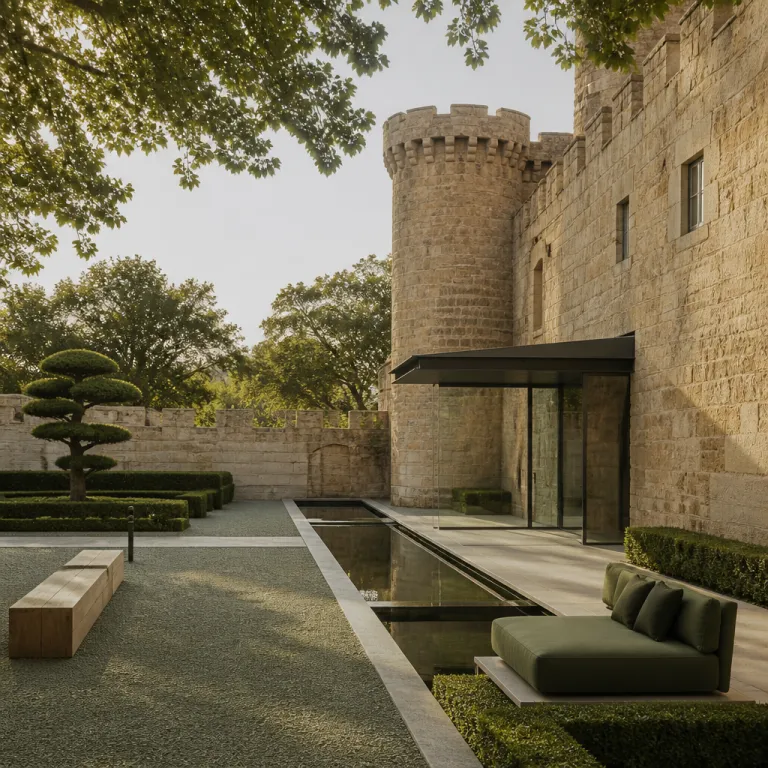
Why military palaces make such powerful hotels
Military palaces turned hotels feel different from residential royal homes. Their thick walls, elevated positions and disciplined geometry create a fortified palace hotel experience that is more cinematic than courtly. You sense the past in every echoing corridor, from the first fortress gate to the last candlelit stair.
Many of these properties began as a fortress or a defensive castle guarding a strategic river, pass or coastal town. Each century fortress was built for control and surveillance, then later softened into a palace and finally into a luxury hotel with marble bathrooms and discreet technology. This layered history means that when you book a room, you are not just reserving a suite; you are stepping into a sequence of wars, treaties and quiet peacetime reinventions.
Across Europe and beyond, governments and royal families have used conversion to save historic sites from decay. A former fort in the east of a country might now host a spa, while a neo gothic palace in the west offers a tasting menu based on local olive oil and estate produce. Heritage tourism reports from organisations such as UNESCO and the UNWTO, including the UNWTO Tourism and Culture Synergies study (2018), note that palace and castle hotels often achieve occupancy levels comparable to leading city properties, underlining how adaptive reuse can keep these buildings economically and culturally alive.
From battlements to bellhops: how conversions actually work
Transforming a military palace into a five star hotel is never cosmetic. Architects must respect the original fortress structure while threading in plumbing, climate control and security that meet modern expectations. The most successful historic fortress hotel projects feel inevitable, as if the building had always been waiting for guests rather than generals.
Restoration teams usually begin by mapping how the castle or fort evolved over time. They identify which parts were originally barracks, which wings became ceremonial halls, and which later additions introduced neo gothic flourishes or domestic comfort. In many European projects, local governments, cultural heritage organisations and international hotel brands work together to stabilise the historic fabric before any luxury interior design appears.
Portugal’s Pousadas programme, launched in 1942 and now operated by the Pestana Hotel Group in partnership with the Portuguese state, is a benchmark for this approach in the west of Europe. Several Pousadas occupy castles built to defend the Atlantic frontier, now reborn as state owned hotels where you sleep inside fortified towers and dine in former refectories. Pousada Castelo de Óbidos, installed within a medieval castle overlooking the town and classified as a national monument, and Pousada Castelo de Alcácer do Sal, set in a hilltop fort above the Sado River, show how a military site can be located at the edge of a medieval settlement yet still feel intimate, with only two or three dozen rooms carved into the old stone.
For travellers comparing urban palace stays, the way London has reimagined its own heritage is instructive; an analysis of how luxury palaces in London evolved from institutional buildings reveals how ceremonial and military power now translate into hospitality theatre. The same logic applies to former admiralty buildings, customs houses and arsenals that have become hotels. In each case, the conversion either honours the building’s disciplined past or drowns it in generic glamour.
Case studies: from Iberian fortresses to Venetian palazzo strongholds
Some of the clearest examples of palace hotels created from military strongholds sit along the old fault lines of European power. In Spain and Portugal, the Pousadas and Paradores networks have turned former castles and forts into destination hotels without erasing their scars. Guests sleep where soldiers once waited for the next war, yet wake to room service and river views.
In Spain, several Paradores occupy a medieval fortress or a Renaissance castle located above a historic town. Parador de Cardona, housed in an 11th century stronghold in Catalonia, and Parador de Jaén, set in the Castillo de Santa Catalina high above Andalusian olive groves, are emblematic examples. These castles built on rocky spurs once controlled trade routes between east and west, and their bastions now frame terraces where olive oil tastings and local wines replace gunpowder. The Parador model, created in 1928 as a state run hotel network, shows how a century fortress can be preserved while generating tourism revenue and keeping rural communities alive.
Further north, in Poland, a handful of fortified residences and neo gothic palaces have been adapted into hotels with a quieter profile. Here, the memory of war is more recent, and the architecture often mixes defensive towers with later romantic façades. On the Adriatic and in the wider Mediterranean, Venetian palazzo fortresses such as Aman Venice in the 16th century Palazzo Papadopoli demonstrate how a building originally designed with defensive features can now host one of the most refined urban hotel experiences in Europe.
For a sense of how palace conversions play out beyond the strictly military, look at the way a Belle Époque landmark on the Danube has been reimagined; the St. Regis Budapest inside the Klotild Palaces, designed by Hungarian architect Kálmán Giergl and completed in 1902, shows how careful restoration can turn a historic site into a contemporary grand hotel. The same principles guide the transformation of former barracks and arsenals into places of leisure. What changes is the thickness of the walls and the stories they tell.
Design tension: softening military architecture without losing its edge
Designers working on a historic military palace hotel walk a tightrope. Military architecture is about control, sightlines and the efficient movement of troops, not about the languid rituals of a spa weekend. Yet guests now expect both narrative depth and comfort, from high thread count sheets to tasting menus that highlight regional olive oil and seasonal produce.
The best conversions keep the fortress legible while layering in warmth. A former fort might retain its parade ground as a courtyard garden, with native trees and a discreet pool set against the old ramparts. Inside, architects often expose original stone, brick vaults and timber beams, then contrast them with soft textiles, sculptural lighting and carefully scaled furniture that respects the monumental proportions.
Lighting is crucial in these spaces, especially in castles built with narrow windows and thick walls. Designers use concealed LEDs to graze stone surfaces, turning what once felt like a war ready bunker into a theatrical backdrop for evening cocktails. Public areas often occupy the most historic rooms, while new wings or lightly altered barracks house the majority of guest rooms to protect the original fabric.
In London, the Waldorf Astoria at Admiralty Arch will crystallise this design tension in a building that was originally both ceremonial gateway and nerve centre for the Royal Navy. Designed by Sir Aston Webb and completed in 1912, the arch once framed imperial processions; its corridors that once channelled officers between war rooms and offices will soon lead guests to suites and lounges. For travellers who enjoy this interplay between power and pleasure, a night in such a property offers more narrative density than many conventional palace stays.
How to choose and book your fortress palace stay
When you browse a luxury booking platform for palaces, filter specifically for properties with a background as a fortress, castle or military residence. These stays tend to offer stronger storytelling, more dramatic architecture and often quieter surroundings than urban royal residences. They also book out quickly, so reserving well in advance is essential, especially for weekends and national holidays.
Start by reading the property’s history section carefully, then cross check it with independent heritage sources. Look for clear references to the original fortress, castle or fort function, and note which century the main structures were built. A credible listing will explain how the building was originally used, whether as a frontier stronghold in the east, a coastal bastion in the west, or a fortified residence guarding a trade route between two rival towns.
Pay attention to how the hotel describes its restoration. Serious projects mention partnerships with conservation bodies, the retention of key historic features and the use of traditional materials alongside modern systems. You should also check for guided tours of the site, tastings of regional products such as local olive oil, and access to normally closed areas like ramparts or underground passages.
For solo explorers who enjoy layering culture into every evening, pairing a fortress stay with a curated urban experience can be rewarding; one option is to combine a rural castle hotel with a night in a heritage rich entertainment venue or historic theatre. This kind of itinerary balances introspective days inside thick walls with more extrovert nights in lively districts. It also underlines how former spaces of power, whether military or cultural, now host some of the most memorable hospitality experiences.
FAQ
Which former palace is now a luxury hotel in Udaipur?
Which former palace is now a luxury hotel in Udaipur? Taj Lake Palace, built in 1746 by Maharana Jagat Singh II as a royal retreat on Lake Pichola, now operates as a luxury hotel. This lakeside property began as a royal retreat and today offers one of India’s most atmospheric heritage stays.
How many palaces have been converted into hotels worldwide?
How many palaces have been converted into hotels worldwide? There is no single definitive global count, but dozens of former palaces and castles on every continent now operate as hotels, reflecting a broader movement to preserve historic buildings by giving them sustainable hospitality roles.
What is the history of Çırağan Palace in Istanbul?
What is the history of Çırağan Palace in Istanbul? Originally an Ottoman palace commissioned in the 19th century by Sultan Abdülaziz and completed in 1871, it was restored in the late 20th century as a luxury hotel. Its position on the Bosphorus makes it a reference point for waterfront palace conversions.
How far in advance should I book a stay in a fortress palace hotel?
These properties often have limited room counts and high demand. Booking at least two to three months ahead is wise for peak seasons. For major holidays or special events, consider securing your reservation even earlier.
What should I look for to ensure a fortress palace hotel respects its heritage?
Focus on how transparently the hotel explains its restoration and history. Look for evidence of collaboration with heritage organisations and clear descriptions of preserved architectural elements. Guided tours, on site museums and detailed room booklets are strong positive signals.