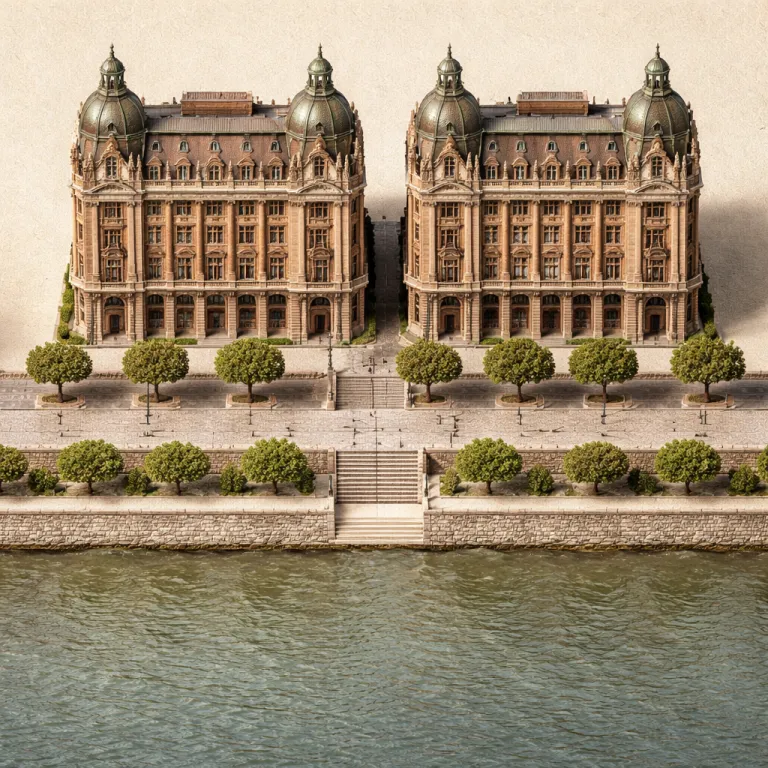
St. Regis arrives in Budapest’s Klotild Palace: a new crown address
The opening of The St. Regis Budapest inside the northern Klotild Palace signals a decisive shift in how the city positions its luxury hospitality. Set on Váci Street at the Pest end of the Elizabeth Bridge, this St. Regis Budapest address places guests within a few hundred metres of the Danube and the historic commercial heart of the city. The project has been carefully designed to blend the Belle Époque façade of the Klotild Palace with interiors that match the anticipatory service standards long associated with St. Regis hotels and the wider Marriott Hotels & Resorts portfolio.
Marriott International has restored the Neo-Baroque palace in partnership with local artisans and cultural heritage experts, including specialists in Hungarian stonework and plaster. The result is a hotel with 102 rooms and suites that aims to feel timeless rather than themed, with ceiling heights, cornices and staircases that reflect the building’s original proportions. Guests will notice how the brand keeps the focus on service rather than spectacle, from butler-led unpacking to a signature Bloody Mary ritual that references both the Danube and the city’s café culture.
This opening St. Regis moment matters beyond one property, because it confirms that Budapest features a palace-level inventory that can now stand beside Paris or Venice. The St. Regis brand, founded by John Jacob “Jack” Astor in New York, has always traded on the idea of the best city address and a certain international discretion. By choosing a crown like the Klotild building, Marriott positions the hotel as a flagship for Marriott Bonvoy members seeking a Hungarian capital stay that feels both central and residential; as one local historian noted during the launch briefing, “this corner of Váci Street has always been where commerce, culture and ceremony meet.” These details, including the 102-key count and the protected-palace status, are drawn from Marriott International’s development announcements and the Hungarian national monument registry.
From Saxe Coburg heritage to contemporary palace stay
The twin Klotild Palaces were commissioned by Archduchess Klotild of Saxe-Coburg and Gotha, part of the wider Saxe-Coburg and Coburg-Gotha dynasties that shaped Central European aristocratic life. Their position at the gateway to Váci Street once framed the arrival into the inner city, and the northern palace now gives The St. Regis Budapest a theatrical yet functional entrance sequence. For travellers comparing palaces, this is not just about a façade; it is about how the lobby, grand staircase and event spaces have been designed to handle both discreet leisure guests and high-profile gatherings.
The hotel’s event spaces are expected to attract weddings, fashion shows and corporate launches that previously defaulted to older grand hotels in the city. Couples planning a celebration can benchmark these new ballrooms against other royal-style venues by consulting an elegant guide to choosing a royal palace banquet hall for unforgettable celebrations, then mapping those criteria onto the Klotild Palace layout. Here, the combination of Hungarian craftsmanship, Marriott International standards and a St. Regis level of anticipatory service should appeal to planners who want heritage without operational compromise.
For individual guests, the appeal lies in how the palace’s history has been edited rather than overwritten, including restored ironwork, stone balustrades and stained glass that frame views towards the Danube and the nearby Hungarian state institutions. The building’s original role as a mixed-use commercial and residential block has informed a floor plan where public spaces feel layered, with quieter salons set back from the main axis of the city. Couples who value privacy will enjoy how some suites are designed as urban apartments, while still giving direct access to the hotel’s signature bar and dining offering.
How The St. Regis Budapest reshapes the city’s luxury hotel landscape
Budapest’s ascent as a luxury destination began when the Four Seasons Gresham Palace reopened and set a new standard for palace conversions in the city. Since then, properties such as Corinthia Budapest and Matild Palace, a Luxury Collection Hotel in the southern twin of the Klotild buildings, have created a competitive cluster of high-end hotels. The arrival of The St. Regis Budapest inside the northern Klotild Palace adds a St. Regis–branded option that leans more heavily into butler-led, bespoke service and a quieter, residential tone.
Compared with Corinthia’s grand boulevard scale and the Matild Palace’s nightlife-focused offering, the new hotel positions itself as a more intimate palace with 102 keys, including suites that look towards the Danube and Gellért Hill. This size allows the brand to maintain anticipatory service at a level where staff can recognise returning guests and adjust preferences without prompting. For couples planning a celebration or board-level meeting, the balance between room count and event spaces means the property can be fully bought out more easily than some larger Budapest hotels.
Travellers weighing options across Europe can treat this opening St. Regis moment as part of a broader trend in Marriott International strategy, where heritage buildings in key city locations become anchors for Marriott Bonvoy loyalty members. Those who have stayed at other St. Regis hotels in Rome or Venice will recognise the signature rituals, but here they are filtered through Hungarian references, including nods to the opera house and the nearby Hungarian State Opera. If you are comparing palace-style properties for a milestone trip, it is worth reading a detailed guide to choosing a royal palace banquet hall for unforgettable celebrations, then applying those criteria to Budapest features such as river views, heritage-protected ballrooms and access to cultural venues.
Position among international brands and what guests can expect
Within the Marriott portfolio, The St. Regis Budapest sits at the very top tier, above most Hotels & Resorts options in the region and alongside other St. Regis–level properties worldwide. The brand’s focus on butler service, a strong bar programme and a sense of timeless décor means the hotel is designed for guests who value service choreography over flashy technology. Couples who have previously favoured independent palaces may find that the combination of a global brand and a historic Hungarian palace offers a reassuring balance between character and reliability.
From a practical perspective, guests will appreciate how the location shortens transfer times to the main cultural axis of the city, including the Danube promenade, the Central Market Hall and the State Opera district. The hotel’s concierge team is expected to curate itineraries that link the palace stay with visits to Hungarian baths, private opera house tours and after-hours access to galleries, so that the St. Regis experience extends beyond the lobby. For many travellers, this integration of city life and palace comfort will feel like the natural next step in Budapest’s evolution from value destination to fully fledged luxury capital.
When did The St. Regis Budapest open? According to the hotel’s pre-opening materials and Marriott International’s development schedule, the planned opening date is April 28, 2026. Where is The St. Regis Budapest located? Váci Street 34, Budapest, 1052. What is the significance of Klotild Palace? A historic Neo-Baroque palace in Budapest, listed as a protected monument in the national registry. These verified details, drawn from Marriott International communications and the Hungarian cultural heritage database, underline how the property’s opening date and exact address place it firmly within the city’s most walkable district, which matters if you plan to rely on trams, metro lines and riverboats rather than private cars.
Inside the palace: design, rituals and how to plan your stay
Inside, The St. Regis Budapest has been designed to feel like a private residence layered over a Hungarian palace, rather than a generic international hotel. Public rooms retain original plasterwork and ironwork where possible, while new materials echo the Belle Époque lines without competing with them. The palette leans towards muted tones that frame the architecture, allowing the brand’s signature art, lighting and floral arrangements to provide a subtle crown to each space.
Guests will encounter the full suite of St. Regis rituals, from the evening sabrage ceremony to a Bloody Mary that references local paprika and the city’s café heritage. The butler-led anticipatory service model means that couples can arrange unpacking, garment pressing and in-room dining timed around theatre or State Opera performances. For those planning a longer stay, the concierge can build days around Hungarian baths visits, private walks through the old city and backstage tours at the Hungarian State Opera, ensuring that the palace is both base and narrative thread.
Wellness spaces are expected to reference the city’s spa culture, including treatments inspired by thermal waters and Hungarian botanicals, while remaining compact enough to feel exclusive. If you are unsure whether this style of palace hotel matches your habits, a guide on what your travel style reveals about your ideal palace hotel can help clarify whether a St. Regis–level property suits you. For travellers who enjoy comparing palace experiences across continents, it is also worth reading about inside Rajasthan’s palace hotels, where maharaja residences become your suite, then contrasting those stays with the more urban, river-focused character of this Klotild address in Budapest.
How to book and who this palace suits best
For Marriott Bonvoy members, The St. Regis Budapest will likely sit at the upper end of the programme’s redemption chart, reflecting both its palace status and its central city location. Cash rates are expected to track slightly above many other Budapest hotels, aligning more closely with the Four Seasons Gresham Palace and Matild Palace than with mainstream international brands. Couples who value earning and burning points within Marriott International while still staying in a historic Hungarian palace will find this combination particularly attractive.
When planning dates, consider how the city’s cultural calendar, including opera house premieres and national holidays linked to the Hungarian state, affects demand. Guests will enjoy quieter public spaces and more flexible anticipatory service on shoulder-season weekdays, while peak weekends may see event spaces booked for weddings and corporate gatherings. If your priority is access to Hungarian baths, river cruises and gallery openings rather than nightlife, you may prefer to schedule stays outside major festival periods.
For palace-focused travellers used to properties linked to dynasties such as Saxe-Coburg or Coburg-Gotha, this Klotild Palace offers a chance to experience that lineage in a city that is still refining its luxury identity. The hotel’s features, including its modest key count, butler service and curated cultural partnerships, make it well suited to couples who prefer depth over breadth in their itineraries. In a market where new hotels open every season, this particular St. Regis Budapest address feels designed to be timeless rather than trendy, which is precisely what many palace seekers now look for.