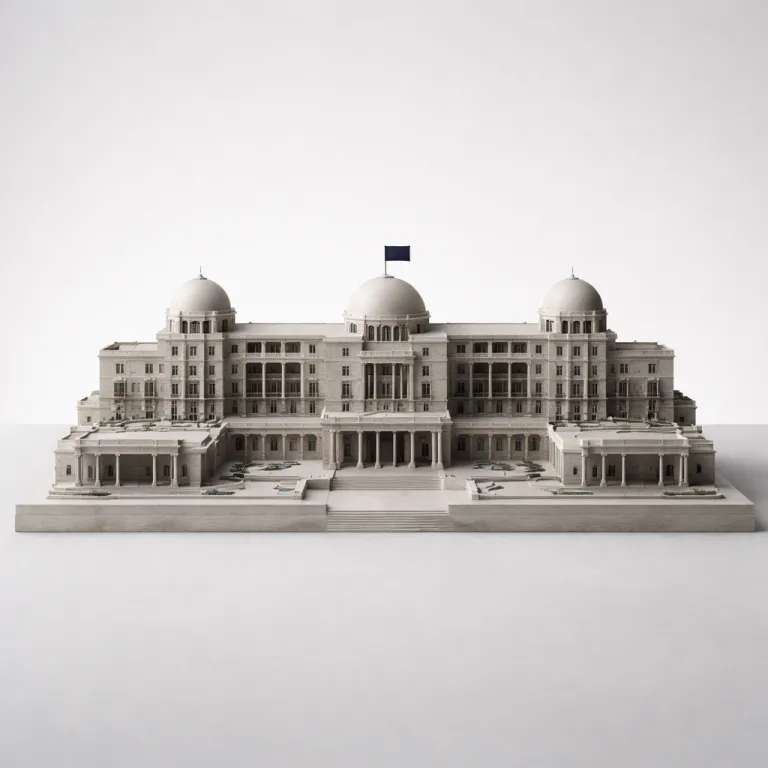
The paradox of sustainable palace hotels
A palace hotel promising sustainability lives with a structural contradiction. Behind the silk drapes and marble staircases, a single luxury hotel can occupy more than 50 000 square metres that demand constant heating, cooling and meticulous management. For travelers who care about palace hotel sustainability and the risk of greenwashing, the question is not whether these properties can ever be perfectly sustainable, but whether their environmental initiatives are honest, measurable and proportionate to their climate and resource impacts.
Think of a heritage palace in Rajasthan or a lakeside resort in Switzerland, where luxury hospitality means chandeliers lit for hours and pools kept at precise temperatures. The hospitality industry rightly argues that adaptive reuse of historic buildings is a form of sustainable tourism, because the greenest building is often the one already built rather than a new concrete structure. Yet even when a luxury hotel runs on renewable energy and invests in green building upgrades, its resource management footprint dwarfs that of many smaller hotels, boutique resorts or an eco lodge hidden in the forest.
For guests, the palace hotel dilemma is emotional as much as rational. Your senses respond to the cool stone corridors, the quiet of a courtyard at dawn and the discreet hospitality that defines true luxury hotels, while your conscience wonders how this level of comfort aligns with environmental responsibility. That tension sits at the heart of debates about palace hotel sustainability and greenwashing, and it is reshaping how high end travel, tourism and hotel management are judged by a new generation of independent travelers.
Authenticity starts with numbers, not adjectives. When a hotel publishes clear data on energy use, water consumption and waste reduction, it moves from vague sustainability posts in marketing content to verifiable environmental responsibility. When it hides behind poetic language about being green and harmonious with local communities, you are right to suspect hotel greenwashing, especially in a segment where room rates can easily justify serious investment in sustainable practices and modern technology.
From green storytelling to certified responsibility
The most reliable filter for palace hotel sustainability claims is independent verification. In a market where consumer protection bodies and tourism researchers have repeatedly warned that hotels sometimes misrepresent sustainability certification, relying on a logo in a brochure is no longer enough for serious luxury hospitality travelers. You need to understand what each certification actually measures, how often audits occur and whether a credible third party is involved.
GSTC, the Global Sustainable Tourism Council, has become a reference point for sustainable tourism in the hospitality industry. When a major luxury property such as Palace Hotel Tokyo publicly states that it has aligned with GSTC-recognized standards and undergone external review, it signals that this palace-style hotel is willing to open its operations to scrutiny rather than rely on self declared sustainability. That move matters for guests comparing hotels in Tokyo, because it separates marketing language from documented environmental responsibility and social responsibility toward local communities and suppliers.
Certification alone does not make a palace hotel sustainable, but it does create a baseline. A credible scheme will examine hotel management structures, resource management systems, environmental impacts and engagement with local communities, not just whether the resort has swapped plastic straws for paper. For travelers reading sustainability posts on hotel websites, the presence of GSTC or an equivalent certification should trigger further questions rather than blind trust, especially when evaluating very large hotels and resorts that operate in fragile tourism destinations.
Look closely at how a property explains its sustainable practices across its hospitality marketing channels. Does the content detail water saving technology, waste separation rates and staff training, or does it simply repeat the word sustainable alongside images of a green garden and a spa scented with citrus to please the senses? When you compare a palace hotel with a newer coastal property such as those featured in refined ocean view guides to superior luxury stays, like this overview of elevated ocean facing palace experiences, the difference often lies in how transparently each property talks about its environmental impacts rather than in the gloss of the photography.
Where palace hotels genuinely move the needle
Some palace hotels are quietly proving that grandeur and sustainability can coexist with integrity. Palace Hotel Tokyo, for example, has reported that kitchen waste is repurposed into fertilizer for a partner farm, closing a loop that many luxury hotels still treat as an afterthought. That kind of resource management goes beyond symbolic gestures and shows how palace hotel sustainability efforts can shift toward measurable progress instead of remaining at the level of marketing slogans.
Elsewhere, historic properties in the Alps and along the Mediterranean are experimenting with rainwater harvesting, greywater recycling and on site gardens that supply their restaurants. Industry case studies published by regional hotel associations describe large resorts cutting potable water consumption by around half after installing such systems, which means you are no longer dealing with vague hotel greenwashing but with structural change in hotel management and environmental responsibility. The best examples publish these figures in annual sustainability reports, making them as visible as their spa menus and room categories.
Technology is accelerating this transition. Artificial intelligence driven building management systems can now adjust heating, cooling and lighting in real time across vast palace wings, reducing energy waste without compromising guest comfort. In luxury hospitality, where every suite and corridor must feel perfectly tempered, this kind of technology quietly underpins sustainable practices that guests may never notice, yet it dramatically reduces environmental impacts over the life of the property.
Adaptive reuse remains a powerful argument for keeping palace hotels alive. Preserving a historic staircase, ballroom or garden through sensitive green building upgrades avoids the emissions of demolition and new construction, while maintaining cultural continuity for local communities who see these properties as part of their urban identity. For travelers choosing between hotels and resorts, a palace that publishes transparent sustainability metrics and detailed hospitality marketing content about its environmental and social responsibility is a stronger ethical choice than a newly built resort that leans heavily on offset schemes and aspirational language, as explored in depth in this analysis of how palace properties are going green while keeping their gilded ceilings.
How to read between the green lines when you book
For the solo explorer planning a palace stay, the real power lies in the questions you ask. Before you confirm a reservation at any hotel, email the property and request a concise overview of its sustainability strategy, including certifications, energy sources and waste policies; if the reply arrives from a generic address such as email protected with only polished marketing language, treat that as a warning sign. A palace that takes sustainability seriously will usually have a dedicated sustainability or hotel management contact able to share concrete data.
When you browse a palace hotel website, move past the hero images and into the sustainability or responsibility section. Look for specific references to GSTC or other certification schemes, details on green building investments, and explanations of how the property supports local communities through employment, sourcing and cultural tourism initiatives. If the content focuses mainly on linen reuse cards and organic bathroom amenities, you may be seeing hotel greenwashing dressed up as environmental responsibility rather than a comprehensive approach to sustainable tourism.
Pay attention to how the property talks about its supply chain and daily operations. Serious luxury hotels will describe sustainable practices in their kitchens, from zero waste cooking to partnerships with local farms, and they will often share numbers on waste diversion or energy reduction over several years. They may also reference technology investments, such as artificial intelligence tools that optimize resource management across the estate, showing that sustainability is embedded in management decisions rather than left to a single enthusiastic équipe.
Finally, use your stay as a quiet audit. Notice whether recycling bins are present in rooms, whether single use plastics still appear at turndown, and whether staff can answer basic questions about the hotel’s environmental impacts without deflecting to generic hospitality marketing phrases. As you compare posts and property profiles on curated platforms dedicated to palace experiences, such as this guide to an elegant palace stay for discerning travelers, keep the question of palace hotel sustainability and greenwashing in mind as a lens, not a slogan, and you will reward the hotels and resorts that treat sustainability as part of their identity rather than a seasonal campaign.
Key figures shaping sustainable palace hospitality
- Consumer watchdogs and tourism researchers have highlighted that a significant share of hotels either exaggerate or misrepresent sustainability certification, which underlines why travelers must verify every claimed certification with the issuing body rather than trusting logos on a website.
- Independent audits for schemes such as GSTC typically review dozens of operational criteria across environmental, social and management dimensions, meaning that a certified palace hotel has undergone far more scrutiny than one relying on self assessed sustainability statements.
- Greywater recycling and rainwater harvesting systems in large hotels and resorts have been documented in hospitality industry case studies to reduce potable water consumption by roughly 40 to 60 %, a scale of saving that is particularly relevant for palace properties with extensive gardens and pools.
- Adaptive reuse of historic buildings, such as converting royal residences into luxury hotels, can cut lifecycle emissions significantly compared with new construction, a point increasingly emphasized by green building councils in Europe and Asia.
- Third party sustainability certifications, when combined with transparent annual reporting, have been shown by organizations such as the Global Sustainable Tourism Council to increase traveler trust and attract more eco conscious guests to luxury hospitality properties.